

About Appreciating the American avocet
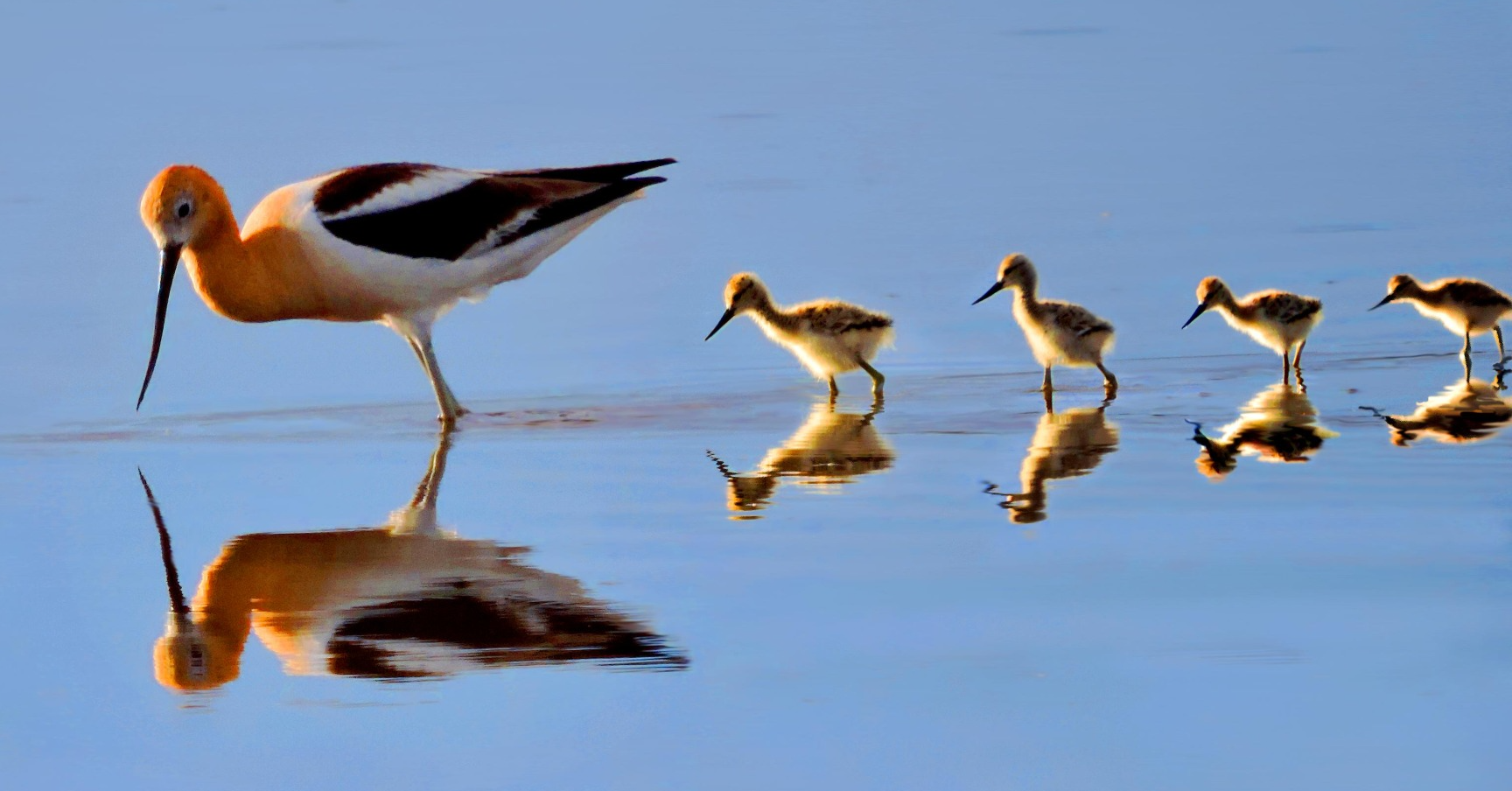
The American avocet (Recurvirostra americana) is a large wader in the avocet and stilt family, Recurvirostridae, found in North America. It spends much of its time foraging in shallow water or on mud flats, often sweeping its bill from side to side in water as it seeks crustacean and insect prey.
Taxonomy
The American avocet was formally described in 1789 by the German naturalist Johann Friedrich Gmelin in his revised and expanded edition of Carl Linnaeus's Systema Naturae. He placed it with the pied avocet in the genus Recurvirostra and coined the binomial name Recurvirostra americana.[2] Gmelin based his description on that by the English ornithologist John Latham who in 1785 had described and illustrated the American avocet in his A General Synopsis of Birds.[3] Latham cited the earlier publication by William Dampier and also that by Thomas Pennant.[4][5] The genus name combines the Latin recurvus meaning 'bent' or 'curved backwards' with rostrum meaning 'bill'.[6] The species is monotypic: no subspecies are recognised.[7]
The American avocet is a member of the order Charadriiformes, which includes shorebirds, gulls, and alcids. Its family, Recurvirostridae, includes stilts and avocets. The genus Recurvirostra includes three other species: the Andean avocet, the pied avocet, and the red-necked avocet.[7]
Description
The American avocet measures 40–51 cm (16–20 in) in length, has a wingspan of 68–76 cm (27–30 in) and weighs 275–420 g (9.7–14.8 oz)[8][9] The bill is black, pointed, and curved slightly upwards towards the tip. It is long, surpassing twice the length of the avocet's small, rounded head. Like many waders, the avocet has long, slender legs and slightly webbed feet.[10] The legs are a pastel grey-blue, giving it its colloquial name, blue shanks. The plumage is black and white on the back, with white on the underbelly. During the breeding season, the plumage is brassy orange on the head and neck, continuing somewhat down to the breast. After the breeding season, these bright feathers are swapped out for white and grey ones.[11] The avocet preens its feathers, commonly considered to be a comfort movement.[12]
The call has been described as both a shrill and melodic alarm bweet, which rises in inflection over time.[10][11][13] Avocets use three distinct calls: common call, excited call, and broken wing call.[14] The common call is a loud repeated wheep. The excited call has a similar wheep sound, but it speeds up rather than having an even rhythm. Lastly, the broken wing call is noticeably different from the other two calls. It is a distressed screech sound and is alarming rather than melodic.[14]
Themes & SDGs Supported





Mission and Vision
The American avocet tends to prefer habitats with fine sediments for foraging.[22] In the winter, it feeds extensively on brine shrimp. Usually, this entails the avocet pecking while walking or wading on the shore, but it can also swim to expand foraging area. During the breeding season, avocets continue to eat brine shrimp but switch mainly to consuming brine flies. Brine flies and brine fly larvae are so abundant in avocet breeding grounds that they often blacken the surface of any exposed mud. Brine flies sustain the avocet during its breeding season.[12] The avocet employs both visual and tactile methods of feeding.[11] The primary visual feeding method is pecking at flies. However the avocet will also feed by plunging (wherein the head and neck of the bird are submerged), snatching (wherein the bird catches a flying insect), and bill pursuit (wherein the bird repeatedly opens and closes its bill while moving its head along the surface of the water). Methods of tactile feeding incl
Investment Terms
To view Terms/Materials, you must have a CataCap account and be logged in. Access to full materials is available to Donor/Investors with an active CataCap balance.
If you do not have an active balance, you may contact the company or fund directly using the “Questions about this investment?” link, or email [email protected] for assistance.
Investment Materials
To view Materials/Terms, you must have a CataCap account and be logged in. Access to full materials is available to Donor/Investors with an active CataCap balance.
If you do not have an active balance, you may contact the company or fund directly using the “Questions about this investment?” link, or email [email protected] for assistance.